
The office is closed for the Holy Day of Obligation - December 8, 2025.


SOLEMNITY OF THE IMMACULATE 

CONCEPTION  OF THE BLESSED VIRGIN MARY 


8:15 a.m. - Mass (English) 

5:30 p.m. - Mass (English) 

6:30 p.m. - Rosary (Spanish)  

7:00 p.m. - Mass (Spanish) 


La oficina permanecerá cerrada por el Día de Precepto -  8 de diciembre de 2025.


SOLEMNIDAD DE LA INMACULADA 

CONCEPCIÓN  DE LA SANTÍSIMA VIRGEN MARÍA 


8:15 a.m. - Misa (Inglés)  

5:30 p.m.  - Misa (Inglés)  

6:30 p.m. - Rosario (Español)  

7:00 p.m. - Misa (Español) 


  • Slide title

    Write your caption here
    Button
  • Slide title

    Write your caption here
    Button
  • Slide title

    Write your caption here
    Button
  • Slide title

    Write your caption here
    Button
  • Slide title

    Write your caption here
    Button
  • Slide title

    Write your caption here
    Button
  • Slide title

    Write your caption here
    Button
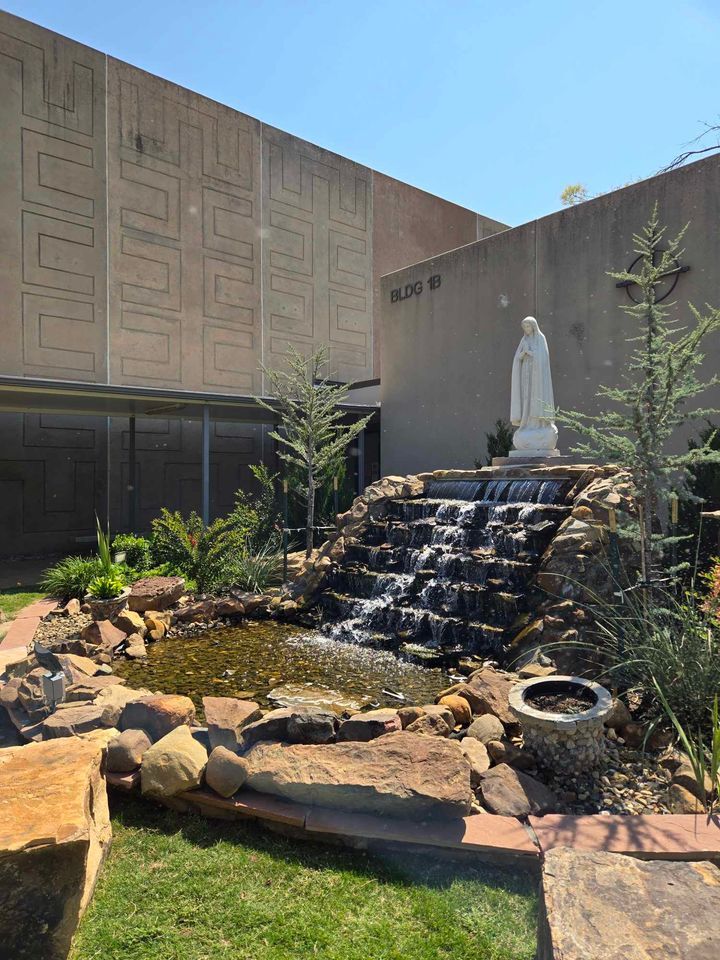
  • Marian Fountain and Garden

    Write your caption here
    Button
  • Slide title

    Write your caption here
    Button
  • Slide title

    Write your caption here
    Button
  • Slide title

    Write your caption here
    Button
  • Slide title

    Write your caption here
    Button
  • Slide title

    Write your caption here
    Button
  • Slide title

    Write your caption here
    Button
  • Slide title

    Write your caption here
    Button
  • Slide title

    Write your caption here
    Button
  • Slide title

    Write your caption here
    Button
  • Slide title

    Write your caption here
    Button
  • Slide title

    Write your caption here
    Button
  • Slide title

    Write your caption here
    Button
  • Slide title

    Write your caption here
    Button
  • Slide title

    Write your caption here
    Button
  • Slide title

    Write your caption here
    Button
  • Slide title

    Write your caption here
    Button
  • Slide title

    Write your caption here
    Button

ENGLISH CHOIR 

We are in need of more singers or cantors for our Saturday and Sunday English Masses.  If you are interested to learn more, please contact Karla Stinnett or the parish office.

Necesitamos más cantantes o cantores para nuestras Misas en Inglés de los Sábados y Domingos. 

Si les interesa obtener más información, 

comuníquese con Karla Stinnett o con la oficina parroquial. 

De antemano muchas gracias por poner sus dones al servicio de nuestro Dios. 

Just Visiting?

Solo de Visita?

Everyone is welcome!


We invite you to join us for Mass, Confession, Eucharistic Adoration, and participation in our many ministries.


Todos son bienvenidos


Lo invitamos a unirse a nosotros para la Misa, la Confesión, la Adoración Eucarística y la participación en nuestros numerosos ministerios.

DAILY MASS SCHEDULE                   


Monday, Wednesday & Friday     8:15 a.m.     English  

Tuesday & Thursday                    8:15 a.m.     Spanish

Wednesday                                  6:00 p.m.     Spanish


HORÁRIO DE MISA DIÁRIA


Lunes, Miércoles y Viernes          8:15 a.m.     Ingles

Martes y Jueves                           8:15 a.m.     Español

Miércoles                                      6:00 p.m.     Español


Construction Fund Update: During December 2025, we will not have a second collection for the Construction Fund. Beginning in 2026, the second collection for the Construction Fund will take place on the second and fourth weekends of each month. These collections will help cover the costs of the rectory bathroom, the remodeling of the parish kitchen, and the Parish Hall and its bathrooms. To date, we have raised $61,565.23. THANK YOU VERY MUCH FOR YOUR GENEROSITY!


Actualización del Fondo de Construcción: Durante el mes de Diciembre del 2025 NO habrá segunda colecta para el Fondo de Construcción. Durante el año 2026 tendremos nuestra segunda colecta el segundo y cuarto fin de semana de cada mes para el Fondo de Construcción para cubrir los costos del baño de la rectoría, la remodelación de la cocina de la parroquia y el Salón Parroquial y sus baños. Al día de hoy, hemos recaudamos $61,565.23. MUCHAS GRACIAS POR SU GENEROSIDAD 

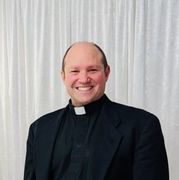
Father
Joseph H. Arledge/Padre José Arledge

From the Pastor's Heart/DESDE EL CORAZÓN DEL PASTOR

    Greetings in the name of our Lord Jesus Christ! As we commence with the Second Week of the holy liturgical Season of Advent, I want to focus our attention on the genesis of the Advent wreath.

    By so doing, let us venture back to the pre-Christian Germanic era in which there were rings or wheels that were decorated with evergreens and candles to symbolize the eternal cycle of the seasons (wheel) and the persistence of life in the midst of winter (evergreens and candles). Many years later, this understanding was Christianized, that is, given a Christian meaning, so that we may allow that which is commonly used to be elevated to that which can somehow relate to the divine.

    With this in mind, let us now peer into the window of the past: Germanic peoples using wreathes with lit candles during the cold and dark December days as a sign of hope in the future warm and extended-sunlight days of Spring.

    Other evidence suggests that the Advent wreath was not invented until the 19th century. Research by Prof. Haemig of Luther Seminary, St. Paul, points to Johann Hinrich Wichern (1808–1881), a Protestant pastor in Germany and a pioneer in urban mission work among the poor as the inventor of the modern Advent wreath.

    During Advent, children at the mission school Rauhes Haus, founded by Wichern in Hamburg, would ask daily if Christmas had arrived. In 1839, he built a large wooden ring (made out of an old cartwheel) with 20 small red and 4 large white candles. A small candle was lit successively every weekday during Advent. On Sundays, a large white candle was lit. The custom gained ground among Protestant churches in Germany and evolved into the smaller wreath with four or five candles known today. Roman Catholics in Germany began to adopt the custom in the 1920s, and in the 1930s it spread to North America. Professor Haemig's research also indicates that the custom did not reach the United States until the 1930s, even among German Lutheran immigrants.

    In Medieval times advent was a fast during which people's thoughts were directed to the expected second coming of Christ; but in modern times it has been seen as the lead up to Christmas, and in that context the Advent Wreath serves as a reminder of the approach of the feast.

    More recently, some Eastern Orthodox families have adopted an Advent wreath with six candles symbolizing the longer Christmas fast in Orthodox tradition, which corresponds to Advent in Western Christianity (cf. Wikipedia/Advent Wreath).

    On an aside, according to most historical documentation, there are four candles to represent the four millennia prior to Christ’s birth, and yet more recently, there are few who focus their attention on the timeframe dating from Abraham to the birth of Christ, which is roughly two millennia, and then two millennia after the birth of Christ. It is worth noting that the former is the traditional perception, and one that is celebrated by Roman Catholicism.

    According to Roman Catholic practice, we have the liturgical Season of Advent to focus on the First Coming of Christ (Christmas) and the Second Coming of Christ (End of the World and General Judgment by Christ Himself). Since this is a rather broad focus, how can we practically prepare ourselves for Christmas?

    It is my recommendation that we do at least two of the following: 1) participate in daily Mass, 2) make a daily visit to Jesus in the Daily Mass Chapel, 3) daily pray one decade of the rosary preferably the Joyful mysteries, 4) read Sacred Scripture, one chapter per day, beginning with the Gospel of Saint Matthew, and/or 5) Pray one “Our Father,” “Hail Mary” and “Glory Be” three times per day with your family, if possible.

    May we make this the Best Advent Ever!

I remain Sincerely your brother in Christ,

Fr. Joe


    ¡Saludos en el nombre de nuestro Señor Jesucristo! Al comenzar la Segunda Semana del Santo Tiempo Litúrgico de Adviento, quiero centrar nuestra atención en el origen de la corona de Adviento.

    De esta manera, retrocedamos a la época germánica pre-cristiana, donde existían anillos o ruedas decoradas con árboles de hoja perenne y velas para simbolizar el ciclo eterno de las estaciones (rueda) y la persistencia de la vida en pleno invierno (árboles de hoja perenne y velas).

    Muchos años después, esta interpretación se cristianizó, es decir, se le dio un significado cristiano, para que podamos permitir que lo común se eleve a lo que de alguna manera puede relacionarse con lo divino. Con esto en mente, echemos un vistazo a la ventana del pasado:

    Los pueblos germánicos usaban coronas con velas encendidas durante los fríos y oscuros días de diciembre como símbolo de esperanza en los futuros días cálidos y soleados de la primavera.

    Otra evidencia sugiere que la corona de Adviento no se inventó hasta el siglo XIX. Una investigación del profesor Haemig, del Seminario Lutero de San Pablo, señala a Johann Hinrich Wichern (1808-1881), pastor protestante en Alemania y pionero de la misión urbana entre los pobres, como el inventor de la corona de Adviento moderna. Durante el Adviento, los niños de la escuela misionera Rauhes Haus, fundada por Wichern en Hamburgo, preguntaban a diario si había llegado la Navidad. En 1839, construyó un gran anillo de madera (hecho con una vieja rueda de carreta) con 20 velas rojas pequeñas y 4 blancas grandes. Se encendía una vela pequeña sucesivamente todos los días laborables durante el Adviento. Los Domingos, se encendía una vela blanca grande. La costumbre se afianzó entre las iglesias protestantes de Alemania y evolucionó hasta convertirse en la corona más pequeña con cuatro o cinco velas que conocemos hoy en día. Los Católicos Romanos en Alemania comenzaron a adoptar la costumbre en la década de 1920, y en la década de 1930 se extendió a Norteamérica. La investigación del profesor Haemig también indica que la costumbre no llegó a Estados Unidos hasta la década de 1930, incluso entre los inmigrantes luteranos alemanes.

    En la época medieval, el Adviento era un ayuno durante el cual la gente pensaba en la esperada segunda venida de Cristo; sin embargo, en la actualidad se ha considerado como el preludio a la Navidad, y en ese contexto, la Corona de Adviento sirve como recordatorio de la proximidad de la festividad.

    Más recientemente, algunas familias ortodoxas orientales han adoptado una corona de Adviento con seis velas, que simboliza el ayuno navideño más largo en la tradición ortodoxa, que corresponde al Adviento en el cristianismo occidental (cf. Wikipedia/Corona de Adviento).

    Por otro lado, según la mayoría de la documentación histórica, hay cuatro velas que representan los cuatro milenios anteriores al nacimiento de Cristo, y sin embargo, más recientemente, son pocos los que centran su atención en el período que va desde Abraham hasta el nacimiento de Cristo, que es aproximadamente dos milenios, y luego dos milenios después del nacimiento de Cristo. Cabe señalar que la primera es la percepción tradicional, y la que celebra el Catolicismo Romano.

    Según la práctica Católica Romana, el Tiempo litúrgico de Adviento se centra en la Primera Venida de Cristo (Navidad) y la Segunda Venida de Cristo (Fin del Mundo y Juicio Final por Cristo mismo). Dado que este es un enfoque bastante amplio, ¿cómo podemos prepararnos de forma práctica para la Navidad?

    Recomiendo que hagamos al menos dos de las siguientes cosas: 1) Participar en la Misa diaria, 2) Visitar diariamente a Jesús en la Capilla de la Misa Diaria, 3) Rezar diariamente una decena del rosario, preferiblemente los misterios gozosos, 4) Leer la Sagrada Escritura, un capítulo al día, comenzando con el Evangelio de San Mateo, y/o 5) Rezar un Padrenuestro, un Ave María y un Gloria tres veces al día en familia, si es posible.

    ¡Que este sea el mejor Adviento de todos! Atentamente, su hermano en Cristo,

Padre Jose

Our church seeks to foster a vibrant spiritual community linked by Baptism, celebrating our diversity, openness and commitment to the teachings of Christ in the Catholic tradition through mercy, service and faithfulness.


Nuestra iglesia busca fomentar una comunidad espiritual vibrante unida por el Bautismo, celebrando nuestra diversidad, apertura y compromiso con las enseñanzas de Cristo en la tradición católica a través de la misericordia, el servicio y la fidelidad.